
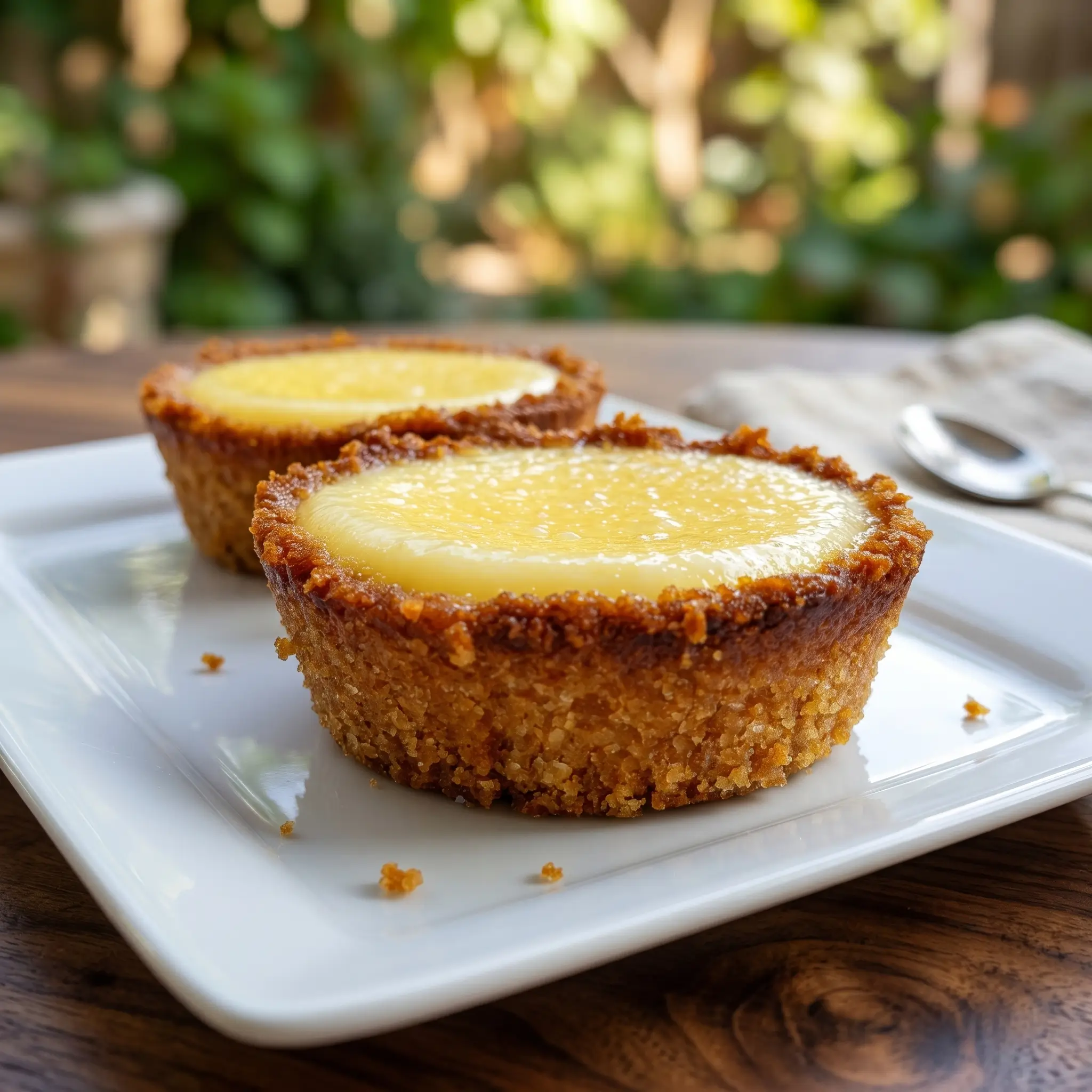
Baby lemon impossible pies are mini custard pies that magically form their own crust while baking. One batter separates into three layers — a soft base, creamy lemon custard center, and golden top. Made with condensed milk, lemon juice, eggs, butter, and self-rising flour. No pie dough, no rolling, no stress. Ready in 25 minutes.
What Are Baby Lemon Impossible Pies?
Baby lemon impossible pies are individual-sized lemon custard pies baked in a muffin tin. They’re called “impossible” because of what happens during baking: you pour in one smooth batter, and the oven does something that seems impossible — it separates the batter into three distinct layers all by itself.
The flour sinks to the bottom and forms a soft, delicate crust. The eggs and condensed milk set in the middle as a silky lemon custard. And the top turns golden and lightly caramelized.
No rolling pin. No pie crust. No pastry skills needed. Just one bowl, a whisk, and a muffin tin.
The original impossible pie concept dates back to the 1970s when Bisquick printed a similar recipe on their boxes. This version miniaturizes the idea, swaps in bright lemon flavor, and uses sweetened condensed milk for an incredibly rich, tangy custard filling.
Why This Recipe Works Every Time
Self-crusting magic: The flour is heavier than the other ingredients, so it sinks during baking and creates a thin, tender base. No blind baking, no soggy bottoms.
Condensed milk does double duty: It sweetens the filling and helps the custard set to a smooth, spoonable texture without needing cornstarch or gelatin.
Lemon juice + eggs = natural custard: The acid in the lemon juice gently curdles the dairy proteins, which — combined with the eggs — creates a custard that sets firm enough to hold its shape but stays silky when you bite in.
Individual portions: Baking in a muffin tin means even cooking, easy serving, and built-in portion control. Every pie comes out the same size.
Love lemon desserts? Our viral lemon posset recipe uses just 3 ingredients to make a creamy, no-bake British custard that pairs beautifully with these pies.
Ingredients
Everything you need is a pantry staple or a quick grocery run.
| Ingredient | Amount | Role |
|---|---|---|
| Sweetened condensed milk | 1 can (14 oz) | Sweetens and helps custard set |
| Fresh lemon juice | ½ cup | Provides tang and triggers custard chemistry |
| Lemon zest | 1 lemon | Adds bright, aromatic citrus flavor |
| Large eggs | 2 | Structure and richness |
| Melted butter, cooled | ¼ cup | Forms the base layer; adds tenderness |
| Self-rising flour | ½ cup | Creates the “impossible” self-forming crust |
| Vanilla extract | 1 tsp | Rounds out the lemon flavor |
| Powdered sugar | For dusting | Finishing touch |
Ingredient Tips
Lemon juice: Always use freshly squeezed. Bottled juice lacks the bright acidity needed to properly set the custard and creates a dull, flat flavor. One large lemon yields about ¼ cup of juice — you’ll need two.
Self-rising flour: If you don’t have any, make your own: whisk together ½ cup all-purpose flour + ¾ teaspoon baking powder + ⅛ teaspoon salt.
Butter: Melt it, then let it cool to room temperature before adding to the batter. Hot butter will scramble the eggs.
Condensed milk: Use full-fat sweetened condensed milk, not evaporated milk. They’re completely different products and the recipe won’t work with evaporated milk.
How to Make Baby Lemon Impossible Pies
Prep time: 10 minutes | Bake time: 18–22 minutes | Chill time: 45–60 minutes | Yield: 12 mini pies
Step 1: Prep
Preheat your oven to 350°F (175°C). Grease a 12-cup muffin tin with butter or nonstick spray. You can also line the bases with small circles of parchment paper for easier removal.
Step 2: Separate the Eggs
Separate the egg yolks from the whites into two bowls. You’ll use both — the yolks go into the batter first, and the whites get whipped and folded in at the end for a lighter texture.
Step 3: Make the Batter
In a large bowl, whisk together the egg yolks, condensed milk, lemon juice, lemon zest, cooled melted butter, and vanilla extract until smooth and well combined.
Sift the self-rising flour into the bowl and whisk gently until no lumps remain. The batter will be thin — that’s exactly right.
Step 4: Whip and Fold the Egg Whites
Using a clean whisk or electric mixer, beat the egg whites until soft peaks form. They should hold their shape when you lift the whisk but still look glossy and slightly droopy at the tips.
Fold one-third of the whipped whites into the batter to lighten it. Then gently fold in the remaining whites in two additions. Use a large spatula and fold from the bottom up — you want to keep as much air as possible.
Step 5: Fill and Bake
Divide the batter evenly among the 12 muffin cups, filling each about ¾ full.
Bake for 18–22 minutes until the tops are lightly golden and the edges are set. The centers should still have a very slight wobble — they’ll firm up as they cool.
Step 6: Cool and Chill
Let the pies cool in the tin for 10 minutes, then carefully remove them to a wire rack. Refrigerate for at least 45–60 minutes before serving. Chilling firms the custard and makes the layers more distinct.
Dust with powdered sugar just before serving — not earlier, or the sugar dissolves and looks patchy.
Nutrition Facts (Per Pie)
Based on 12 servings
| Nutrient | Amount |
|---|---|
| Calories | ~180 kcal |
| Protein | 4 g |
| Fat | 8 g |
| Carbohydrates | 23 g |
| Sugar | 18 g |
| Fiber | 0.2 g |
Baby Lemon Impossible Pies
Equipment
- Muffin Tin
- Mixing Bowl
Ingredients
Batter
- 1/2 cup all-purpose flour
- 1 cup sugar
- 1/2 cup butter melted
- 2 eggs
- 1 cup milk
- 1/4 cup lemon juice fresh
- 1 tbsp lemon zest
- 1 tsp vanilla extract
Instructions
- Preheat the oven to 180°C (350°F) and grease a muffin tin.
- In a mixing bowl, whisk together the flour and sugar.
- Add melted butter, eggs, milk, lemon juice, lemon zest, and vanilla extract. Mix until smooth.
- Pour the batter evenly into the muffin tin cups.
- Bake for 20–25 minutes or until the tops are lightly golden and set.
- Allow to cool before removing from the tin. Serve and enjoy.
Notes
The Science Behind the “Impossible” Layers
The self-crusting effect isn’t magic — it’s basic food science working in your favor.
Layer 1 (bottom crust): The flour and butter are denser than the liquid ingredients. During the first few minutes of baking, gravity pulls them to the bottom of each muffin cup, where they settle and form a thin, tender base.
Layer 2 (custard center): The eggs and condensed milk set into a smooth custard as the proteins coagulate from the heat. The lemon juice helps this process by gently curdling the dairy proteins, creating a firmer set without any added thickeners.
Layer 3 (golden top): The whipped egg whites rise to the surface and bake into a light, slightly caramelized cap that gives each pie its signature golden look.
All three layers form simultaneously from one batter. That’s what makes it “impossible.”
Flavor Variations
Lemon Coconut Impossible Pies
Fold ½ cup desiccated coconut into the batter before adding the egg whites. The coconut adds a subtle tropical chew that pairs beautifully with the lemon custard. Sprinkle a little toasted coconut on top after baking.
Key Lime Impossible Pies
Swap the lemon juice and zest for key lime juice and lime zest. Use the same quantities. The result is a tangier, slightly more tropical version that tastes like a mini key lime pie. Serve with a small dollop of whipped cream.
Lemon Berry Impossible Pies
Press 2–3 fresh blueberries or a single raspberry into the top of each filled muffin cup before baking. The berries sink slightly into the custard and burst during baking, creating pockets of fruity sweetness.
Orange Impossible Pies
Replace lemon juice with fresh orange juice and use orange zest. Add a pinch of cardamom to the batter. The result is warmer and more mellow — perfect for fall and winter.
Chocolate Lemon Impossible Pies
Fold 2 tablespoons of cocoa powder into the flour before sifting. The chocolate adds a subtle bitter depth that plays off the bright lemon surprisingly well.
Craving something richer? Our chocolate ricotta cake guide pairs creamy ricotta with dark chocolate for an indulgent, easy dessert that uses a similar one-bowl approach.
How to Make Them Gluten-Free, Dairy-Free, or Vegan
Gluten-Free
Replace the self-rising flour with a gluten-free 1:1 baking blend (like Bob’s Red Mill or King Arthur). Add ¾ teaspoon baking powder and ⅛ teaspoon salt if your blend doesn’t include leavening. The texture will be nearly identical.
Dairy-Free
Use coconut condensed milk (it’s widely available now) in place of regular sweetened condensed milk. Replace butter with coconut oil. The custard will set slightly differently but still tastes excellent — and you get a subtle coconut undertone that complements the lemon.
Vegan
Combine the dairy-free swaps above with a flax egg (1 tablespoon ground flaxseed + 3 tablespoons water per egg, rested 5 minutes). Skip the whipped egg white step — the pies will be denser but still delicious with a more flan-like texture.
Troubleshooting Common Problems
The Custard Didn’t Set
The pies need to chill for at least 45 minutes — ideally an hour. If they’re still wobbly after chilling, they were likely underbaked. Next time, add 2–3 minutes to the bake time. The edges should be firmly set and the center should jiggle only very slightly when you tap the pan.
The Pies Stuck to the Tin
Grease the tin generously, especially in the corners where the cup meets the base. Alternatively, line each cup with a small parchment circle on the bottom. Let the pies cool in the tin for a full 10 minutes before attempting to remove them — rushing this step is the most common cause of sticking.
The Tops Cracked
This usually means the oven was too hot or the pies overbaked. Use an oven thermometer to verify your temperature. The pies should come out when the centers still have a slight wobble. Cracks don’t affect taste, though — just dust a little extra powdered sugar over them.
The Pies Sank in the Center
A slight sink is completely normal for impossible pies — it’s part of the charm. If they collapsed significantly, the egg whites may not have been whipped enough, or they were over-folded (deflated). Whip to soft peaks and fold gently.
The Crust Didn’t Form
Make sure you’re using self-rising flour, not all-purpose flour without added leavening. The leavening agent helps the flour settle properly during baking. Also ensure the butter is fully melted (not just softened) — it needs to be liquid to sink with the flour.
Storage and Serving
Storing
Refrigerator: Place cooled pies in an airtight container with a paper towel on the bottom (it absorbs condensation and prevents sogginess). They keep for 3–4 days.
Freezer: Wrap each pie individually in plastic wrap, then place all wrapped pies in a freezer bag. Freeze for up to 2 months. Thaw overnight in the refrigerator for best texture.
Powdered sugar: Always dust just before serving. If you add it earlier, the moisture from the custard dissolves it and it disappears.
Serving Ideas
For afternoon tea: Serve alongside Earl Grey — the bergamot notes in the tea enhance the lemon beautifully.
For brunch: Arrange on a tiered stand with fresh berries and a pot of whipped cream on the side.
For dinner parties: Serve slightly warm with a small scoop of vanilla ice cream on top. The contrast of cold ice cream and warm custard is exceptional.
For kids: Let them help with the whisking and pouring — impossible pies are one of the most forgiving recipes for young bakers.
Hosting a spring brunch? Pair these pies with our pineapple banana bread for a sweet tropical spread, or serve alongside our 2 banana muffins for variety.
Frequently Asked Questions
Why are they called impossible pies?
The name comes from the “impossible” way one smooth batter separates into three distinct layers during baking — a soft crust on the bottom, a creamy custard in the middle, and a golden top. No special technique is needed; the ingredients do the work themselves based on their different densities.
Can I make impossible pie in a regular pie dish instead of a muffin tin?
Yes. and pour the batter into a greased 9-inch pie dish and bake at 350°F for 40–45 minutes instead of 18–22 minutes. The center should be set with a very slight jiggle. Let it cool completely and refrigerate before slicing.
So, What makes the crust form on its own?
The self-rising flour and melted butter are denser than the liquid custard ingredients. During baking, gravity pulls them to the bottom of each cup, where they settle and form a thin, tender base. The flour’s leavening agents help it puff slightly, creating a recognizable crust texture.
Can I use bottled lemon juice?
You can, but fresh lemon juice produces noticeably brighter flavor and better custard-setting chemistry. If you must use bottled, reduce the amount by about 1 tablespoon, since bottled juice tends to be more concentrated and less aromatic.
Do impossible pies need to be refrigerated?
Yes. Because they contain eggs and dairy (condensed milk), these pies should be refrigerated within 2 hours of baking. Store covered in the fridge for up to 3–4 days. Many people find they taste even better the next day once the lemon flavor has had time to develop.
Can I make these ahead of time?
Absolutely — they’re ideal make-ahead desserts. Bake and chill them up to 2 days before serving. Keep them covered in the refrigerator and dust with powdered sugar right before you serve.
The Bottom Line
Baby lemon impossible pies are one of the most satisfying desserts you can make with minimal effort. One bowl, one batter, and the oven handles the rest — delivering perfect mini pies with a soft crust, and silky lemon custard center, and golden top.
They work for everything from casual weeknight treats to elegant dinner party desserts. They’re easy enough for kids to help with and impressive enough to serve at a bridal shower. And because they’re individual portions, there’s no awkward slicing or serving — just grab one and enjoy.
Next time you’ve got a can of condensed milk and a couple of lemons, give these a try. The hardest part is waiting for them to chill.