
If you’ve come across the term “Amish Amoxicillin” online and assumed it was some kind of homemade antibiotic — you’re not alone. It’s one of the most misleading names in the wellness world. Let’s clear that up right away, then dive into the actual recipe (which, when used correctly, is a genuinely useful immune-supporting tonic to keep in your fridge during cold and flu season).
With that out of the way — let’s talk about why this old-fashioned recipe has stayed popular for generations.
What Is “Amish Amoxicillin,” Really?
Despite the name, this recipe has nothing to do with the Amish using prescription drugs. It’s a traditional herbal tonic — closely related to fire cider or “master tonic” — that combines pungent, immune-supporting kitchen ingredients into one potent shot.
Think of it as the great-grandparent of the modern wellness shot you’d buy at a juice bar. Generations of folk-medicine traditions (not just Amish — similar versions exist across Eastern European, Appalachian, and Mediterranean cuisines) have used these ingredients during cold weather for general wellness.
The “amoxicillin” in the name is purely metaphorical — an old wives’ way of saying “this is what we reach for when we feel a cold coming on.”
Amish Amoxicillin Recipe (Traditional Immune-Support Tonic)
Equipment
- 1-quart glass mason jar with lid
- Fine mesh strainer or cheesecloth
- Glass storage bottles
Ingredients
Tonic Base
- 1/2 cup fresh garlic peeled and roughly chopped
- 1/2 cup fresh ginger root peeled and grated
- 1/2 cup fresh horseradish root grated, or 2 tbsp prepared horseradish
- 1/2 cup white or yellow onion chopped
- 2 fresh hot chili peppers jalapeño or habanero, chopped (optional)
- 2 tbsp fresh turmeric root grated, or 1 tbsp ground turmeric
- 1 tbsp black peppercorns
- 1 lemon zest and juice
- 3 cups raw apple cider vinegar with the mother enough to fill the jar
To Finish
- 1/4 cup raw honey added after straining, to taste
Instructions
Prepare and Steep
- Prep your ingredients. Chop and grate everything as described. The smaller the pieces, the more flavor and active compounds you’ll extract.
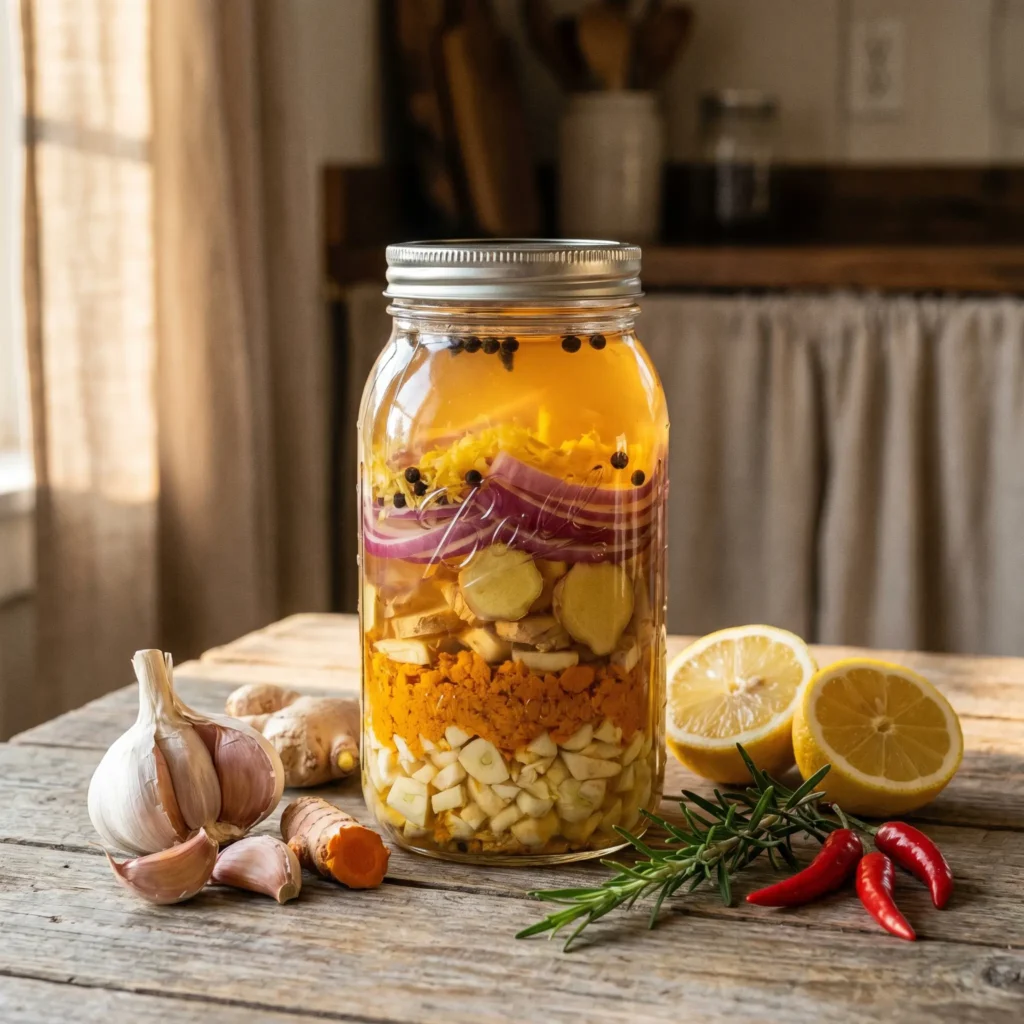
- Layer into the jar. Add all chopped ingredients to a clean quart-sized mason jar. Pack them in — the jar should be about 3/4 full of solids.
- Cover with apple cider vinegar. Pour raw ACV over the ingredients until the jar is full, leaving about 1 inch of headspace. Make sure all solids are fully submerged to prevent spoilage.
- Seal and store. Cover with a plastic lid (vinegar corrodes metal). If using a metal lid, place a piece of parchment paper between the lid and jar.
- Steep. Store in a cool, dark place (a pantry works) for 2 to 4 weeks. Shake the jar gently every day or two.
Finish and Bottle
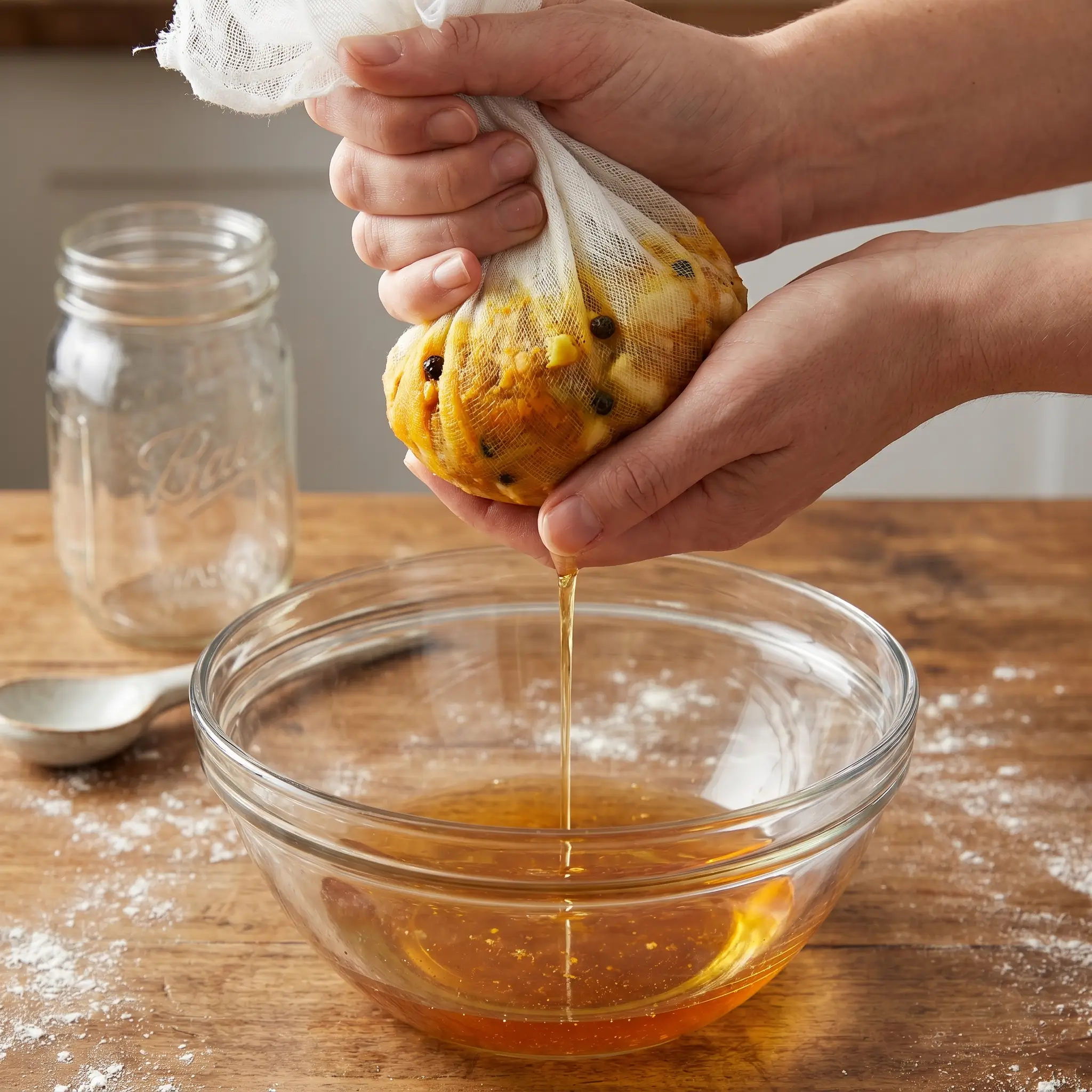
- Strain. After steeping, strain through a fine mesh strainer or cheesecloth into a clean bowl. Press the solids firmly to extract every drop. Discard the pulp or compost it.
- Add honey. Stir in raw honey to taste. This balances the intense bite of the tonic.
- Bottle and refrigerate. Transfer to clean glass bottles and store in the refrigerator. Keep cold to maintain freshness for up to 6 months.
Notes
- Children under 1 (botulism risk from honey)
- Pregnant or breastfeeding women — talk to your doctor first
- People on blood thinners (garlic, ginger, turmeric can affect clotting)
- People with acid reflux, GERD, or ulcers
- Anyone allergic to any of the ingredients
Why People Love This Tonic
The ingredients aren’t magic, but each one has solid food-science behind its reputation:
- Garlic — Contains allicin, a compound studied for antimicrobial properties in lab settings.
- Ginger — A well-known anti-inflammatory and digestive aid; popular for soothing sore throats.
- Onion — Rich in quercetin, an antioxidant flavonoid.
- Horseradish — Sharp and sinus-clearing; traditionally used to break up congestion.
- Turmeric — Contains curcumin, studied for anti-inflammatory effects.
- Apple Cider Vinegar (with the mother) — A traditional folk remedy for general wellness.
- Raw Honey — Soothes sore throats and adds natural sweetness. Manuka honey in particular is well-regarded for cough and throat comfort.
- Cayenne Pepper — Contains capsaicin; warming and traditionally used to support circulation.
None of these will cure an infection. But as a daily wellness ritual during cold-and-flu season, many people swear by them.
Amish Amoxicillin Recipe
Yield: About 1 quart (32 oz)
Prep time: 15 minutes
Steep time: 2–4 weeks
Storage: Up to 6 months refrigerated
Ingredients
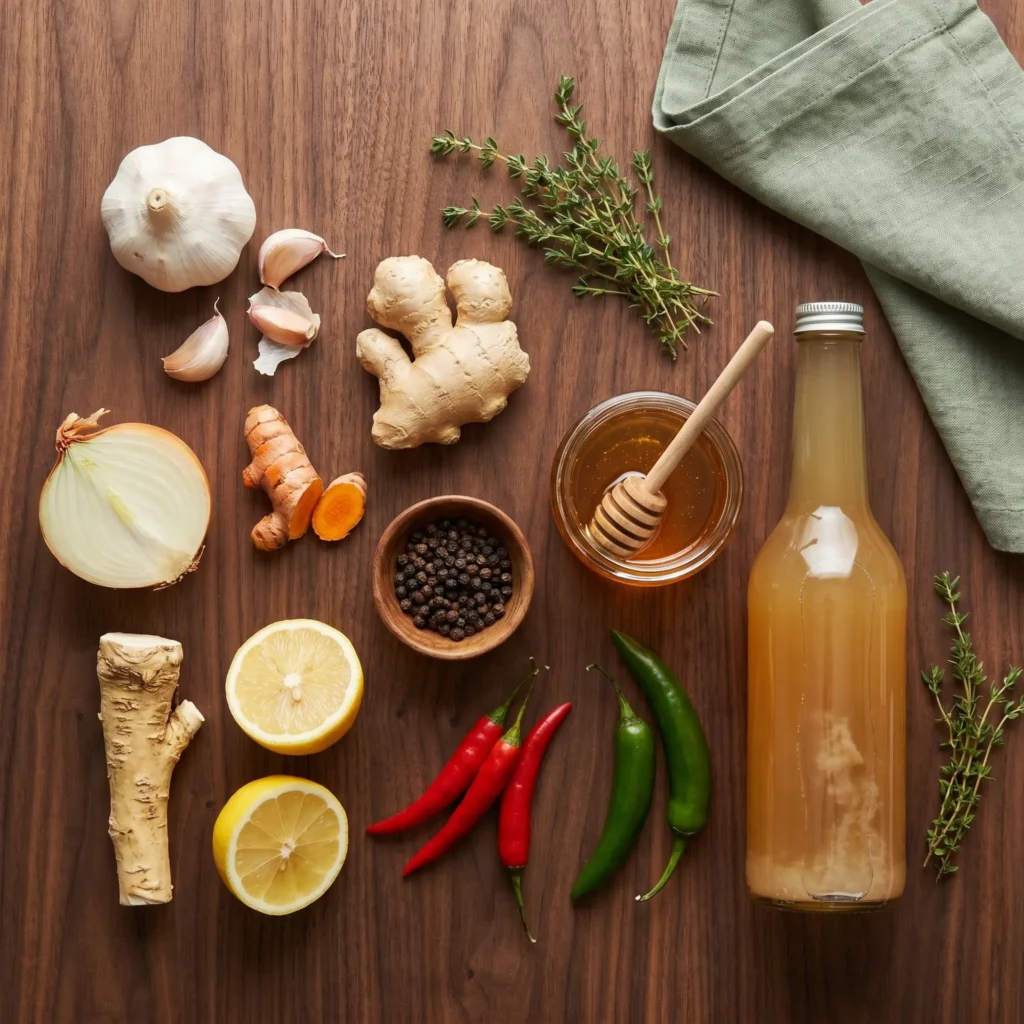
- ½ cup fresh garlic, peeled and roughly chopped
- ½ cup fresh ginger root, peeled and grated
- ½ cup fresh horseradish root, grated (or 2 tbsp prepared horseradish)
- ½ cup white or yellow onion, chopped
- 2 fresh hot chili peppers (jalapeño or habanero), chopped (optional)
- 2 tbsp fresh turmeric root, grated (or 1 tbsp ground turmeric)
- 1 tbsp black peppercorns
- Zest and juice of 1 lemon
- Raw apple cider vinegar with the mother (enough to fill the jar — about 3 cups)
- ¼ cup raw honey (added at the end)
Equipment
- 1-quart glass mason jar with lid
- Fine mesh strainer or cheesecloth
- Clean glass storage bottles
Instructions
- Prep your ingredients. Chop and grate everything as described. The smaller the pieces, the more flavor and active compounds you’ll extract.
- Layer into the jar. Add all chopped ingredients to a clean quart-sized mason jar. Pack them in — the jar should be about 3/4 full of solids.
- Cover with apple cider vinegar. Pour raw ACV over the ingredients until the jar is full, leaving about 1 inch of headspace. Make sure all solids are fully submerged (this prevents spoilage).
- Seal and store. Cover with a plastic lid (vinegar corrodes metal). If using a metal lid, place a piece of parchment paper between the lid and jar.
- Steep. Store in a cool, dark place (a pantry works) for 2 to 4 weeks. Shake the jar gently every day or two.
- Strain. After steeping, strain through a fine mesh strainer or cheesecloth into a clean bowl. Press the solids firmly to extract every drop. Discard the pulp (or compost it).
- Add honey. Stir in raw honey to taste. This balances the intense bite of the tonic.
- Bottle and refrigerate. Transfer to clean glass bottles and store in the refrigerator. Yes, this should be refrigerated after straining — keep it cold to maintain freshness for up to 6 months.
How to Use It
This is a traditional wellness tonic, not a medicine. Common ways people incorporate it:
- A daily teaspoon during cold-and-flu season as a general wellness habit
- Diluted in warm water with extra honey and lemon as a soothing winter drink
- As a salad dressing base mixed with olive oil
- A splash in tomato juice or vegetable broth
Start with a small amount — this stuff is intense. Most people work up to 1 tablespoon at a time.
Who Should NOT Use This Tonic
Even though it’s made from food ingredients, this tonic isn’t right for everyone:
- Children under 1 — never give honey to infants (botulism risk)
- Pregnant or breastfeeding women — talk to your doctor first
- People on blood thinners — garlic, ginger, and turmeric can affect blood clotting
- People with acid reflux, GERD, or ulcers — the vinegar and spice can worsen symptoms
- Anyone allergic to any of the ingredients
- Anyone with a current bacterial infection who needs real antibiotics — please see a doctor
When to See a Doctor (Please Read This)
Folk remedies have their place, but they cannot replace medical care. See a healthcare provider promptly if you experience:
- Fever above 102°F (38.9°C) lasting more than 2 days
- Severe sore throat, especially with white patches or swollen lymph nodes (possible strep)
- Difficulty breathing, chest pain, or wheezing
- Ear pain (especially in children)
- Painful or frequent urination
- Symptoms that worsen instead of improving after 5–7 days
Bacterial infections like strep throat, pneumonia, and UTIs require real antibiotics. Delaying treatment can lead to serious complications.
Frequently Asked Questions
Does Amish Amoxicillin actually contain amoxicillin?
No. It contains zero antibiotic medication. The name is folk-tradition slang, not a literal description.
Can it replace antibiotics prescribed by my doctor?
Absolutely not. Never stop or skip prescribed antibiotics. Bacterial infections need real medical treatment.
Should it be refrigerated?
Yes — once strained, store it in the fridge for freshness. It can last up to 6 months when refrigerated properly.
What does it taste like?
Sharp, spicy, sour, and pungent — not for the faint of heart. The honey helps, but it’s an acquired taste.
Can I make a version without alcohol or vinegar?
This recipe doesn’t contain alcohol. Vinegar is essential to the preservation method, so it can’t easily be substituted.
Is it the same as fire cider?
Very similar — fire cider is the more widely known herbal tonic with overlapping ingredients. “Amish Amoxicillin” is essentially a regional name for the same tradition.
How often should I take it?
There’s no medical guideline because it isn’t medicine. Most folk traditions suggest a daily teaspoon during cold-and-flu season as a general wellness habit.
Will it help if I already have a cold?
It may feel soothing (warm water + honey + ginger genuinely helps a sore throat), but it won’t shorten illness duration. Rest, fluids, and proper care matter most.
Final Thoughts
Amish Amoxicillin is a fun, traditional wellness tonic with a misleading name. Treat it as what it is — a flavorful, fiery herbal preparation in the same family as fire cider — and it’s a wonderful pantry staple to have on hand during cold weather.
Treat it as something it isn’t — a substitute for real medicine — and you could put yourself at risk. Always listen to your body, and never delay medical care for a real infection.
Make a batch, label it clearly, and enjoy it as part of a balanced approach to wellness that includes good sleep, nutritious food, hydration, and proper medical care when you need it. Looking for more? Browse our wellness recipes collection.
Tried this recipe? Tag us on Instagram @yuumrecipes — we’d love to see your jar in progress!
This article is for general informational purposes only and is not medical advice. Always consult a licensed healthcare provider for medical concerns. Statements about traditional herbal ingredients have not been evaluated by the FDA and are not intended to diagnose, treat, cure, or prevent any disease.