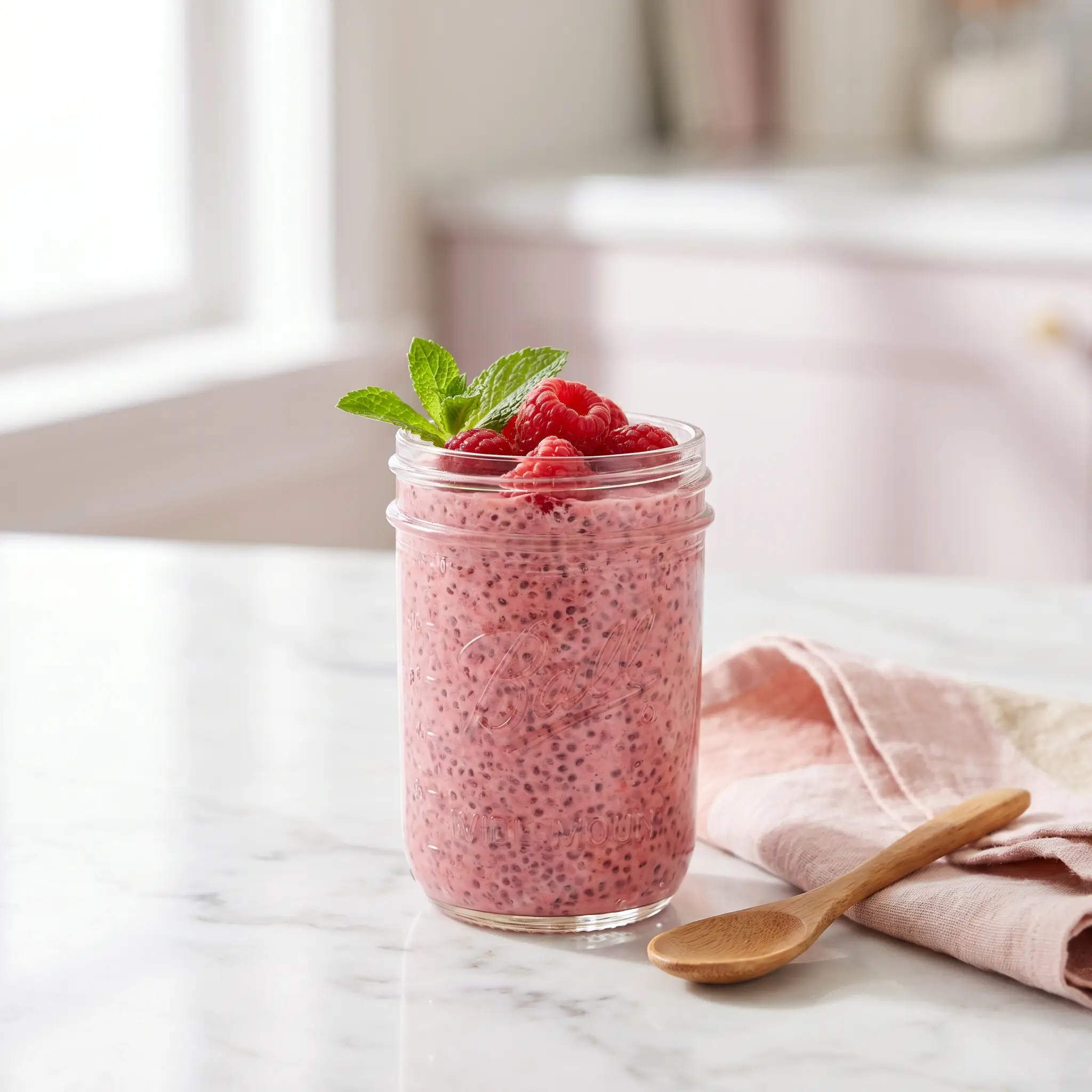
Scroll through TikTok, Pinterest, or Instagram in 2026 and you’ll see it everywhere: a small jar of thick, fruity chia jello sitting on a sunny kitchen counter, captioned with promises of effortless weight loss. The chia weight loss jello trend has exploded — for good reason, this time.
Unlike most viral wellness recipes, this one actually has solid science behind it. Two tablespoons of chia seeds deliver about 10 grams of soluble fiber, 5 grams of omega-3 fatty acids, and a unique gelling property that makes you feel full faster than almost any other plant food. When you eat it 15 to 30 minutes before a meal, your stomach is already partially full before the first bite.
And here’s what makes the chia jello recipe special compared to the traditional gelatin trick we’ve covered in our gelatin guides: it’s 100% vegan, plant-based, kosher, halal, and works on a low-carb, low-calorie, or bariatric-friendly plan. No animal collagen. No cooking required. Just five minutes of prep and an overnight set in the fridge.
At Yuum Recipes, we tested this version 30+ times to find the exact ratio, the right liquid, and the small mistakes that turn good chia jello into a clumpy disaster. Below is the complete guide: the 3-ingredient base recipe, six tested variations, the science behind why it works, and honest answers to every question you might have before you make your first jar.
What Is Chia Jello and Why Is It Going Viral?
Chia jello is a plant-based dessert or snack made by soaking chia seeds in liquid until they form a thick, jelly-like texture. The science is simple and beautiful: chia seeds are coated in a soluble fiber called mucilage that absorbs up to 10 to 12 times its weight in water. After 15 to 20 minutes in liquid, the seeds swell and the mixture sets into a soft, spoonable gel that resembles traditional jello but contains zero animal products.
It’s the vegan answer to the gelatin trick that took TikTok by storm in 2024 and 2025. The original gelatin trick — a small serving of unflavored gelatin powder dissolved in water and consumed before meals — works because gelatin protein triggers satiety and physically slows gastric emptying. Chia jello does the exact same thing, but through fiber instead of protein. And in many ways, it does it better.
Why People Are Switching from Traditional Jello to Chia Jello
Three things have pushed chia jello past traditional gelatin jello on social media in 2026:
- It’s plant-based and inclusive. Gelatin is derived from animal collagen (mostly beef or pork), which excludes vegans, vegetarians, observant Jewish and Muslim communities, and anyone avoiding animal products. Chia jello works for everyone.
- It’s higher in fiber. Two tablespoons of chia seeds deliver about 10 grams of fiber. Most adults don’t get even half their daily fiber target, so this is meaningful nutrition, not just a diet trick.
- It’s a complete cold prep. No boiling water, no blooming, no whisking out clumps. Just stir, wait, and refrigerate.
If you’re already familiar with the bariatric gelatin recipe for weight loss or the pink gelatin recipe trend, think of this as the plant-based cousin of the same satiety strategy.
The 3 Core Ingredients in Chia Jello (And Why Each One Matters)
The base chia weight loss jello recipe uses just three ingredients. This is the foundation — every variation we’ll cover later builds on this same simple core.
Chia Jello Recipe for Weight Loss
Equipment
- Mason jar (8 oz)
- Spoon for stirring
- Measuring spoons
- Measuring Cup
Ingredients
Base Recipe
- 2 tablespoons whole chia seeds black or white, both work
- 3/4 cup unsweetened fruit juice cranberry, pomegranate, mango, or blueberry
- 1 teaspoon raw honey or maple syrup or stevia for sugar-free version
Optional Add-ins
- 1 pinch pink Himalayan salt for trace minerals and flavor balance
- 1/4 teaspoon pure vanilla extract optional, adds dessert-like flavor
- 1 teaspoon fresh lemon juice brightens flavor
- 1/4 cup fresh berries for topping strawberries, blueberries, or raspberries
Instructions
- Pour 3/4 cup of your chosen liquid (juice, plant milk, or herbal tea) into a small mason jar or glass. Add 2 tablespoons of chia seeds and 1 teaspoon of sweetener. Stir vigorously with a spoon for at least 30 seconds. This first stir is critical — if you skip it, the seeds will clump at the bottom.
- Wait 2-3 minutes, then stir again vigorously for another 30 seconds. The chia seeds will start absorbing liquid and rising in the jar. This second stir breaks up any remaining clusters and ensures even gelling. Don’t skip this step.
- Cap the jar and place it in the refrigerator. The mixture sets fully in about 4 hours, but the texture is best after an overnight rest of 8 to 12 hours. The chia seeds will absorb up to 10 times their weight in liquid and form a soft, jelly-like gel.
- When ready to eat, top with fresh berries, a sprinkle of cinnamon, or a small drizzle of honey. Adding toppings right before eating keeps them fresh and prevents them from sinking into the gel.
- For best weight-loss results, eat one jar 15 to 30 minutes before your main meal (lunch or dinner). This timing allows the chia gel to expand in your stomach and trigger satiety hormones before your meal arrives.
Notes
1. Chia Seeds (2 tablespoons)
This is the active ingredient. Two tablespoons of chia seeds — black or white, both work identically — deliver roughly 10 grams of fiber, 5 grams of omega-3 fatty acids, 3 grams of complete plant protein, and a meaningful dose of magnesium, calcium, and manganese for fewer than 140 calories.
What to look for: Whole chia seeds (not ground), labeled “raw” or “organic.” Organic isn’t strictly necessary, but freshness matters. Old chia seeds lose their gelling power and won’t thicken properly. If your chia jello hasn’t set after 6 hours in the fridge, your seeds are likely past their prime.
Brands that work well: Nutiva, Viva Naturals, Bob’s Red Mill, Anthony’s Goods, Navitas Organics. Any reputable brand sold in airtight packaging will perform well. Avoid bulk-bin chia that’s been exposed to air for unknown amounts of time — those seeds are more likely to be stale.
2. Liquid Base (3/4 cup)
The liquid is what the chia seeds gel into. The choice you make here determines flavor, color, and calorie count. Three categories work especially well for weight loss:
- Unsweetened 100% fruit juice: Cranberry, pomegranate, mango, blueberry, or cherry juice. Adds 60 to 120 calories per serving and provides natural sweetness, anthocyanins, and a beautiful color. Always read labels — “juice cocktail” or “juice drink” usually contains 20 to 40 grams of added sugar that defeats the entire purpose.
- Plant-based milk: Unsweetened almond, coconut, or oat milk. Adds 30 to 50 calories and creates a creamier, pudding-like texture. Best for dessert-style chia jello that’s meant to satisfy sweet cravings.
- Herbal tea or water: Hibiscus tea (zero calories, beautiful pink color, antioxidants), green tea (zero calories, mild metabolism support), or plain filtered water. The lowest-calorie option at fewer than 15 calories per serving.
3. Sweetener or Flavor Enhancer (1 teaspoon)
This is where you control the calorie load and the flavor profile. Pick one:
- Raw honey or maple syrup: Adds 15 to 20 calories and a soft natural sweetness. Best for chia jello that uses water or unsweetened tea as the liquid base.
- Liquid stevia or monk fruit: Zero calories, no insulin response. Ideal for the strict sugar-free chia jello version that fits keto, low-carb, and Type 2 diabetes-friendly plans.
- Lemon or lime juice: A teaspoon of fresh citrus juice doesn’t sweeten but it brightens the flavor and adds a small dose of vitamin C. Particularly good with hibiscus or cranberry juice as a base.
Optional Add-Ins (The 4 Most Effective Upgrades)
- Pink Himalayan salt (1 small pinch): Adds trace minerals and balances tartness without adding calories. This is the bridge between this recipe and our pink salt trick weight loss recipe — many readers stack both rituals during the day.
- Fresh berries on top (1/4 cup): Strawberries, blueberries, or raspberries add antioxidants, fiber, and visual appeal without major calorie impact (about 15 to 20 calories per serving).
- Vanilla extract (1/4 teaspoon): Pure (not imitation) vanilla extract transforms a basic chia jello into something that genuinely tastes like dessert. Pairs especially well with plant-based milk versions.
- Cinnamon (1/4 teaspoon): Mild blood sugar support, warming flavor, no calories. Works particularly well with mango or apple juice bases.
How to Make Chia Jello for Weight Loss (Step-by-Step)
This is the exact method we use after testing dozens of variations. Total active time is about 5 minutes; the rest is hands-off setting time in the fridge.
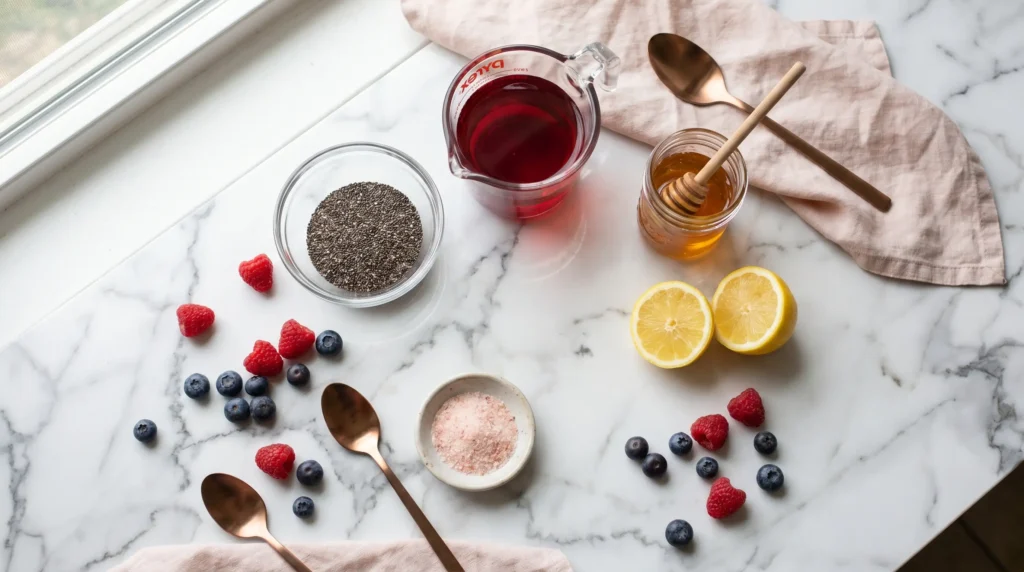
Ingredients (makes 1 jar / 1 serving)
- 2 tablespoons whole chia seeds
- 3/4 cup liquid base (unsweetened juice, plant milk, herbal tea, or water)
- 1 teaspoon honey, maple syrup, or stevia (to taste)
- Optional: pinch of pink Himalayan salt, 1/4 teaspoon vanilla, fresh berries to top
Instructions
- Combine everything in a jar (1 minute): Pour 3/4 cup of your chosen liquid into a small mason jar or glass. Add 2 tablespoons of chia seeds and 1 teaspoon of your chosen sweetener. Stir well with a spoon for at least 30 seconds. This first stir is critical — if you skip it or rush it, the seeds will clump together at the bottom.
- Wait 2-3 minutes, then stir again: The chia seeds will start absorbing liquid and rising in the jar. Stir again vigorously for another 30 seconds to break up any clusters. This second stir is what turns the difference between perfect chia jello and a gloppy, uneven mess.
- Cover and refrigerate (4-12 hours): Cap the jar and place it in the refrigerator. The mixture sets fully in about 4 hours, but most people find the texture is best after an overnight rest of 8 to 12 hours.
- Add toppings before eating: When you’re ready to eat, add fresh berries, a sprinkle of cinnamon, a drizzle of honey, or whatever toppings you like. Adding them right before eating keeps them fresh and prevents them from sinking into the gel.
- Eat 15 to 30 minutes before your main meal: This is the timing that drives the appetite-control effect. The chia gel needs that window to reach your stomach, expand fully, and trigger satiety hormones before your meal arrives.
Nutrition Information (per jar, with unsweetened juice)
| Calories | 160-185 kcal |
| Fiber | 8-10 g (28-35% DV) |
| Protein | 4-5 g |
| Carbohydrates | 18-22 g |
| Fat | 6-7 g (mostly omega-3) |
| Sugar (natural) | 8-12 g |
| Prep Time | 5 minutes |
| Set Time | 4-12 hours (overnight ideal) |
For a sugar-free version using herbal tea and stevia, calories drop to approximately 100 per jar with all 8-10 grams of fiber preserved. That’s the most weight-loss-friendly variation if you’re tracking calories closely.
When and How to Eat Chia Jello for Best Weight Loss Results
Timing matters more than most people realize. Chia jello works through gentle, sustained satiety, not aggressive appetite suppression. That means the window before your meal is essential.
The Pre-Meal Window (15-30 Minutes)
Eat one jar of chia jello 15 to 30 minutes before your largest meal of the day — usually lunch or dinner. This window allows three things to happen:
- The chia gel reaches your stomach and continues to expand
- Soluble fiber triggers the release of satiety hormones (CCK, PYY, and GLP-1)
- Your brain registers fullness signals before hunger drives overeating at the meal
Less than 15 minutes and the satiety signal hasn’t fully kicked in. More than 45 minutes and the effect starts to fade. The 15-30 minute window is the sweet spot.
As an Afternoon Bridge Snack
If you’re prone to mid-afternoon snacking — that 3 to 5 PM window where your willpower drops and you reach for whatever is convenient — chia jello works beautifully as a bridge snack. The high fiber content carries you to dinner without the energy crash that comes from sugary snacks.
As an Evening Sweet-Craving Killer
Many of our readers find their hardest weight-loss battle is evening sweet cravings. A jar of chia jello with fresh berries and a drizzle of honey delivers a genuinely sweet, satisfying experience for around 180 calories — versus 400+ for typical evening snacks like ice cream, cookies, or chocolate.
Realistic Weight Loss Timeline
Week 1: You’ll likely notice meals feel smaller and you reach satisfaction earlier. Portions naturally shrink by 10-20% without conscious restriction.
Week 2-3: Cravings between meals decrease. Evening snacking — typically the hardest weight-loss habit to break — becomes noticeably easier.
Week 4 and beyond: Combined with general mindful eating, you may start seeing 1-2 pounds per week of fat loss. That’s the realistic, sustainable rate. Anyone promising 10 pounds in a week is selling supplements, not nutrition.
For a complete morning-to-evening weight management protocol, many readers pair chia jello with the ice water hack for weight loss in the morning and a small serving of pink salt water mid-morning for hydration.
6 Best Chia Jello Variations (Tested and Ranked)
1. Pink Chia Jello (Cranberry-Pomegranate)
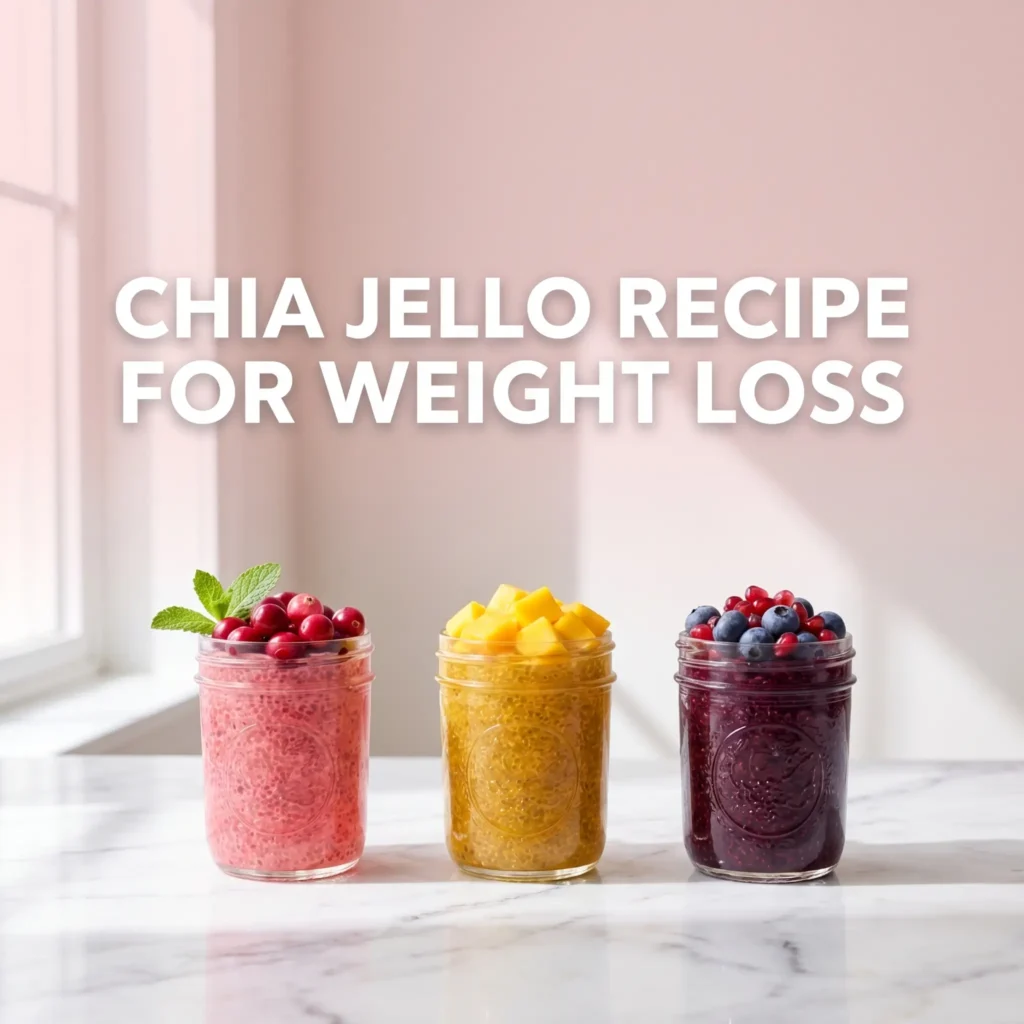
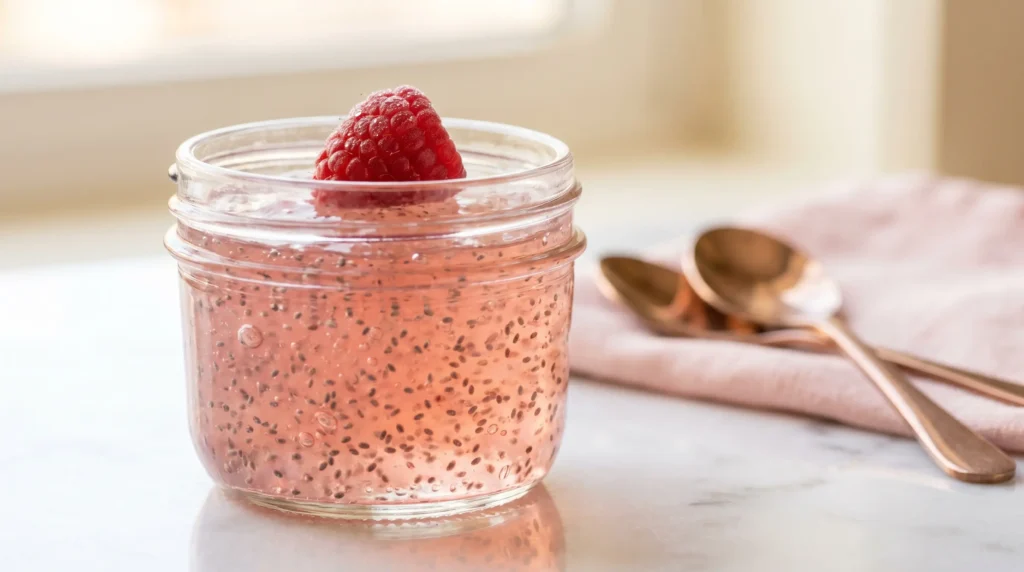
Replace the liquid base with 3/4 cup unsweetened cranberry-pomegranate juice. The result is a stunning ruby-pink chia jello packed with anthocyanins (the same antioxidants that make blueberries and red wine famous). This is the most photogenic version — perfect for Pinterest pins and Instagram. About 175 calories per jar.
2. Mango Chia Jello (Tropical)
Use 3/4 cup 100% mango juice. The sweetness of mango means you can skip added sweetener entirely. Top with diced fresh mango or a few slices of kiwi for a tropical breakfast-meets-dessert vibe. About 180 calories per jar.
3. Sugar-Free Chia Jello (Keto and Diabetes-Friendly)
Use 3/4 cup brewed and cooled hibiscus tea or unsweetened almond milk. Sweeten with 3-4 drops of liquid stevia or 1/4 teaspoon monk fruit. This is the strictest weight-loss version at about 90-100 calories per jar with the same 8-10 grams of fiber.
4. High-Protein Chia Jello (For Bariatric Patients)
Add 1 scoop (about 20 grams) of unflavored or vanilla collagen peptides or plant-based protein powder when you mix the chia and liquid. Bumps protein from 4 grams to 24+ grams per jar. Ideal for post-bariatric surgery patients, anyone training, or anyone who finds standard chia jello not filling enough. For the gelatin-based version, see our complete bariatric gelatin recipe for weight loss guide.
5. Layered Chia Jello Parfait (Visually Stunning)
Make two batches: one with strawberry juice (red layer) and one with mango juice (yellow layer). Pour the first batch into your jar, refrigerate for 1 hour until partially set, then carefully pour the second batch on top. Refrigerate overnight. The result is a two-tone chia jello parfait that looks like a fancy restaurant dessert and costs you under $1 to make.
6. Lemon-Hibiscus Detox Chia Jello
Brew 3/4 cup hibiscus tea, cool to room temperature, stir in 1 teaspoon fresh lemon juice and 2 tablespoons chia seeds. Sweeten lightly with stevia. The hibiscus delivers a deep magenta color, the lemon brightens it, and the whole thing tastes refreshing and slightly tart. Around 80-90 calories per jar — the lowest-calorie option in this list.
Does Chia Jello Actually Work for Weight Loss? The Real Science
This is the section most viral recipe articles skip. Here’s an honest look at what research supports — and what’s still hype.
What the Research Actually Supports
Soluble fiber slows gastric emptying. A 2017 review published in the journal Nutrients found that soluble fiber from sources like chia seeds significantly slows the rate at which food leaves the stomach. Slower gastric emptying means longer-lasting fullness and lower blood sugar response after meals.
Pre-meal fiber reduces calorie intake. Multiple studies have shown that consuming 10 or more grams of soluble fiber 15 to 30 minutes before a meal reduces calorie intake at that meal by 10-15%. The chia jello recipe delivers exactly that fiber dose at exactly that timing.
Omega-3s reduce inflammation linked to weight gain. Chia seeds are one of the richest plant sources of alpha-linolenic acid (ALA), an omega-3 fatty acid linked to reduced systemic inflammation. Chronic inflammation is increasingly recognized as a contributor to weight gain and insulin resistance.
What the Research Does NOT Support
Chia seeds do not “melt fat.” There is no mechanism by which chia seeds directly burn body fat. Any weight loss comes from reduced overall calorie intake driven by greater satiety — not a metabolic effect of the chia itself.
Chia jello is NOT a natural Ozempic. GLP-1 medications work through powerful hormonal pathways that suppress appetite at the brain level. Chia jello’s effect is mechanical (stomach volume) and modest by comparison. It’s a useful tool, but it operates on a different scale entirely.
“Lose 10 pounds in a week” claims are pure marketing. Sustainable fat loss is roughly 1 to 2 pounds per week, and only when combined with overall calorie awareness and movement. Anyone promising more is selling supplements.
The Honest Bottom Line
The chia weight loss jello is a legitimately useful pre-meal habit. It delivers meaningful fiber, real omega-3s, and a modest but real satiety effect. It’s also affordable (about 50 cents per jar), endlessly customizable, and works for nearly every diet philosophy. It’s not magic, but it doesn’t have to be — small, repeatable habits are what drive sustainable change.
Chia Jello vs. Traditional Gelatin Jello: Which Is Better for Weight Loss?
Both work. They just work differently. Here’s a head-to-head comparison so you can choose what fits your body and lifestyle.
| Factor | Chia Jello | Gelatin Jello |
| Mechanism | Soluble fiber + omega-3s | Animal collagen protein |
| Calories per serving | 90-185 | 25-50 |
| Fiber | 8-10 g | 0 g |
| Protein | 4-5 g (plant) | 6-9 g (animal) |
| Vegan-friendly | Yes | No |
| Cooking required | None — cold prep | Hot water needed |
| Set time | 4-12 hours | 2-3 hours |
| Best for | Vegans, fiber-needs, gut health | Strict calorie counters, bariatric |
If you’re vegan, vegetarian, observant Jewish or Muslim, prone to digestive issues, or simply trying to hit fiber targets: chia jello wins clearly. If you’re tracking calories aggressively, post-bariatric, or want maximum protein per calorie: gelatin jello wins. Many of our readers rotate between both depending on the day.
5 Common Mistakes That Ruin Chia Jello
Mistake 1: Using Hot Liquid
Chia seeds gel best in cold or room-temperature liquid. Hot liquid (above 110°F / 43°C) damages the seeds’ mucilage coating and disrupts the gelling structure. If you want to use brewed tea as a base, brew it strong and let it cool completely to room temperature before mixing with chia.
Mistake 2: Skipping the Second Stir
This is the single most common mistake. After mixing chia seeds with liquid, wait 2-3 minutes, then stir again vigorously. If you don’t, the seeds clump together at the bottom of the jar and you end up with watery liquid on top and a dense, gummy mass below. Two stirs, separated by a 2-3 minute pause, is the secret.
Mistake 3: Using Sweetened Juice Cocktails
Regular cranberry juice cocktail or fruit punch contains 25-40 grams of added sugar per cup, which adds about 100-160 calories of pure sugar to your jar and undermines the entire weight-loss premise. Always use “100% juice” or “unsweetened” varieties. Read labels carefully.
Mistake 4: Eating It Right Before the Meal
Eating chia jello 5 minutes before sitting down to dinner gives zero time for satiety hormones to activate. The 15-30 minute pre-meal window exists for a biological reason. Set a timer if you need to.
Mistake 5: Using Old or Stale Chia Seeds
Chia seeds have a long shelf life (about 2 years sealed) but they degrade once exposed to air. If your jello hasn’t set firmly after 8 hours in the fridge, your seeds are likely stale. Replace them — fresh chia seeds set into a thick gel within 4 hours every single time.
Who Should Avoid Chia Jello (Important Safety Notes)
Chia jello is one of the safest weight-loss recipes you can make at home, but it’s not appropriate for everyone. Skip this recipe or talk to a healthcare provider first if any of the following apply:
- You have a history of swallowing difficulties (dysphagia). Dry chia seeds expand dramatically when they encounter liquid. There have been documented cases of chia seeds expanding in the throat. Always pre-soak chia seeds (as in this recipe) — never eat them dry, especially if you have any swallowing concerns.
- You have IBS, diverticulitis, or active GI flare-ups. The high fiber content may worsen symptoms during flare periods. Reintroduce chia gradually when symptoms are stable, starting with 1 teaspoon per day.
- You’re on blood-thinning medication. Chia seeds contain meaningful amounts of omega-3s, which can have a mild blood-thinning effect. If you’re on warfarin, aspirin, or similar medications, talk to your doctor before adding chia daily.
- You have a history of disordered eating. Pre-meal appetite-control tools can reinforce restrictive eating patterns. If you’ve struggled with anorexia, bulimia, or binge eating disorder, this recipe may do more harm than good.
- You have a chia seed or salvia hispanica allergy. Rare but real. Discontinue immediately if you experience any allergic symptoms.
- You’re pregnant or breastfeeding. Chia is generally considered safe in normal food amounts during pregnancy, but appetite-suppressing routines are not appropriate during this time. Eat chia for nutrition, not for weight management.
Frequently Asked Questions About Chia Jello
How long does chia jello last in the fridge?
Properly stored in a sealed jar in the refrigerator, chia jello stays fresh for 5 to 7 days. The texture is best in the first 3 days. After day 5, it may release some liquid (called syneresis) — just stir it back in or pour it off.
Can I meal prep chia jello for the week?
Yes, this is one of its main advantages. Make 5 to 7 jars on Sunday evening, label each by day of the week, and you have a ready-to-eat pre-meal snack for every workday. Prep takes about 15 minutes total for the entire week.
Will chia jello make me bloated?
If you currently eat very little fiber (less than 15 grams per day), introducing 8-10 grams of fiber suddenly can cause gas and bloating for the first 3-5 days. Start with half a serving for the first 3 days, drink plenty of water, and ramp up gradually. After your gut microbiome adjusts, the bloating disappears completely.
How does chia jello compare to chia pudding?
They’re essentially the same recipe with different liquid-to-chia ratios. Chia pudding uses about 1/4 cup chia per 1 cup liquid for a softer, looser consistency. Chia jello uses 2 tablespoons chia per 3/4 cup liquid for a firmer, more gel-like set. Both work for weight loss.
Can I use chia gel as a vegan substitute for gelatin in other recipes?
Yes, with limits. Chia gel works in puddings, smoothies, jams, and overnight oats. It does not work as a 1:1 swap in recipes that need real gel structure (gummies, panna cotta, marshmallows). For those applications, agar-agar is a better vegan substitute for gelatin.
Is chia jello keto-friendly?
Yes, with the sugar-free version. Use unsweetened almond milk or hibiscus tea as your base, sweeten with stevia or monk fruit, and skip the fruit juice. Net carbs come down to roughly 4-6 grams per jar. Most of the carbs in chia seeds are fiber, which doesn’t impact blood sugar.
Can children eat chia jello?
Yes, but skip the appetite-control framing for kids. Make a sweeter, fruit-juice-based version as an afternoon snack or dessert, not a pre-meal hunger suppressor. Children have growing bodies with higher caloric needs, and any appetite-suppressing routine is inappropriate without pediatrician supervision.
Does chia jello really work better than the gelatin trick?
“Better” depends on your goals and diet. Chia jello delivers more fiber and is plant-based; gelatin delivers more protein per calorie and is leaner. For pure calorie efficiency, the gelatin trick wins. For nutrient density, fiber, and gut health, chia jello wins. Many of our readers use both.
Why hasn’t my chia jello set after 6 hours?
Three likely causes: (1) your chia seeds are stale — replace them, (2) your liquid was too hot when you mixed — let everything cool completely, or (3) you didn’t stir twice — chia clusters block proper gelling. If all three are correct, your jello will set within 4 hours every single time.
Can I freeze chia jello for longer storage?
Technically yes, but the texture suffers significantly. Frozen and thawed chia jello becomes watery and grainy as the gel structure breaks down. Stick with refrigerator storage for up to 7 days. If you want longer storage, freeze the dry chia seeds in their original bag (they’ll last 2 years frozen) and make fresh jello as needed.
The Bottom Line on the Chia Jello Weight Loss Recipe
The chia weight loss jello isn’t another empty viral promise. It’s a genuinely useful pre-meal habit grounded in real digestive physiology — soluble fiber slows gastric emptying, triggers satiety hormones, and helps you eat slightly less at your next meal. Combined with overall mindful eating, that small habit can create the calorie deficit that drives sustainable fat loss.
What this recipe won’t do is replace balanced nutrition, regular movement, adequate sleep, or stress management — the actual drivers of long-term weight change. The best viral recipes are the ones you can layer onto real habits, not the ones that promise to replace them entirely.
Ready to build your full weight management toolkit? Pair the chia jello recipe with our pink salt trick weight loss recipe for morning hydration, the bariatric gelatin recipe for weight loss for the protein-focused alternative, and the dr oz pink gelatin recipe for a juice-based satiety drink. Together, these recipes form a realistic, affordable, plant-and-protein-balanced approach to natural weight management — no prescription required, no gimmicks, just small habits that work.